**Bay Area Open Taekwondo Championship uses the date December 31 of the given year (December 31, 2026) to determine the age of all competitors. For example, an athlete that turns 12 on October 26, 2026, will be considered as a 12-year-old in the given event, even though they are 11 years old at the time of the event for all divisions.

The current USAT & WTF competition rules will govern this championship. The tournament director may modify some rules according to the local conditions. They also reserve the right to combine or divide weight categories depending on the size of the group.
Permitted techniques
- Fist technique: A straight punching technique using the knuckle part of a tightly clenched fist
- Foot technique: Delivering techniques using any part of the foot below the ankle.
Permitted areas
- Head Area (Foot techniques only permitted). The “head area” is all areas above the bottom of the headgear, including face, ears, top and back of head.
- Trunk. This area includes the entire trunk which is covered by the chest gear between the armpit and the pelvis. This includes the back, except for the spine. Attacks by fist and foot techniques are permitted. If a legal implement hits a legal target area, but part of the striking implement also lands in an illegal area, it will be considered a legal strike.
Safety Equipment Weigh-ins: World class sparring divisions only. From 11:00-12:00 pm at the tournament site staging area.
All contestants shall wear an approved trunk protector, head protector, groin guard, forearm protector, shin-instep protector, and a mouth protector. (Gloves are mandatory for the World Class Division; all other divisions are optional)
Jewelry is to be removed and finger/toenails are to be neatly trimmed.
Gam-jeom Penalties
- Crossing the Boundary Line
- Falling
- Avoiding or delaying the match
- Grabbing or pushing the opponent
- Lifting the leg to block or/and kicking the opponent’s leg to impede the opponent’s kicking attack, or lifting a leg or kicking in the air for more than 3 seconds to impede the opponent’s potential attacking movements, or aiming a kick below the waist
- Kicking below the waist
- Attacking the opponent after “Kal-yeo”
- Hitting the opponent’s head with the hand
- Butting or attacking with the knee
- Attacking the fallen opponent
- Following misconducts of contestant or coach:
- Not complying with the referee’s command or decision
- Inappropriate protesting of officials’ decisions
- Inappropriate attempts to disturb or influence the outcome of the match
- Provoking or insulting the opposing contestant or coach
- Unaccredited doctor/physicians or other team officials found to be seated in the doctor’s position
- Any other severe misconduct or unsportsmanlike conduct on the part of a contestant or coach
Competition Systems:
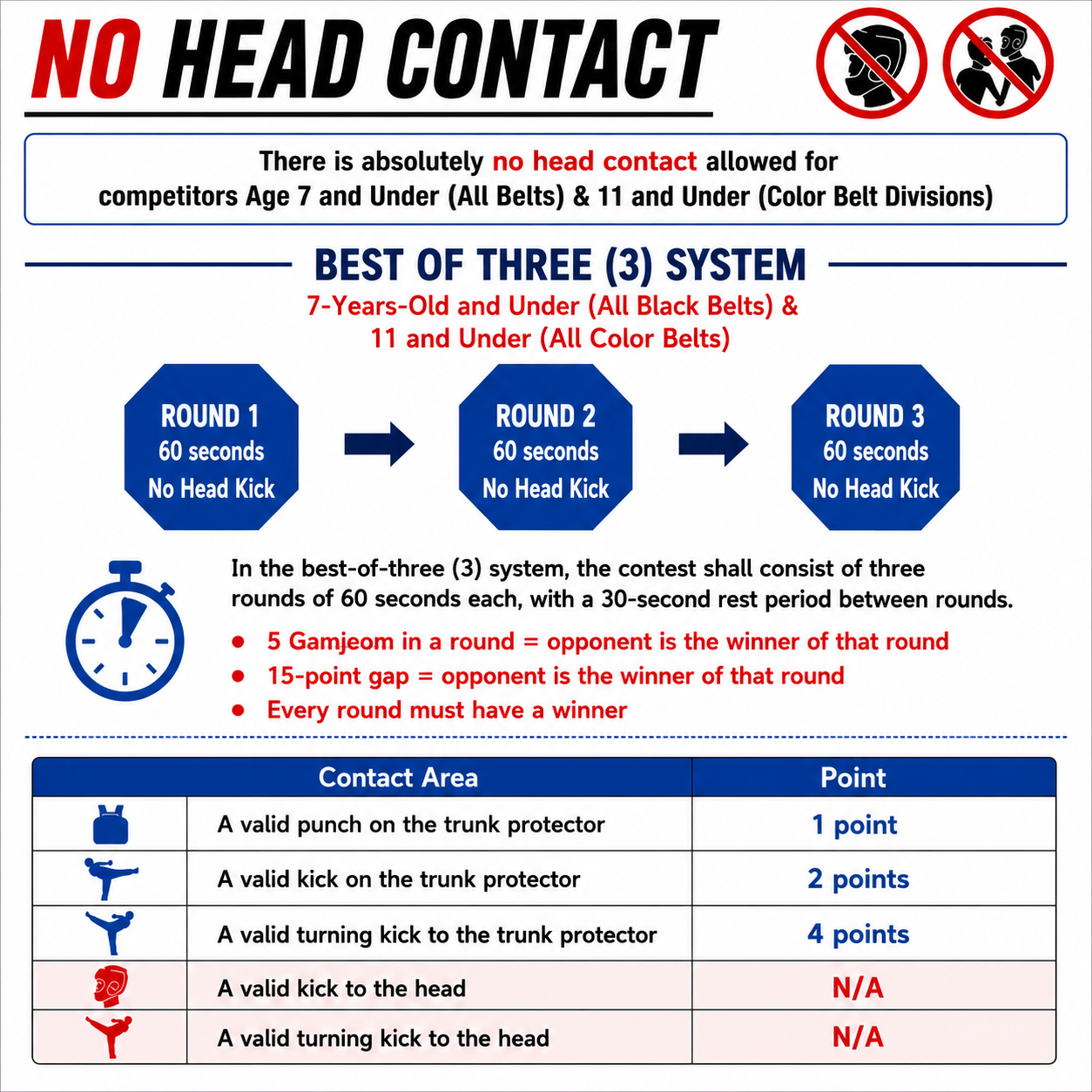
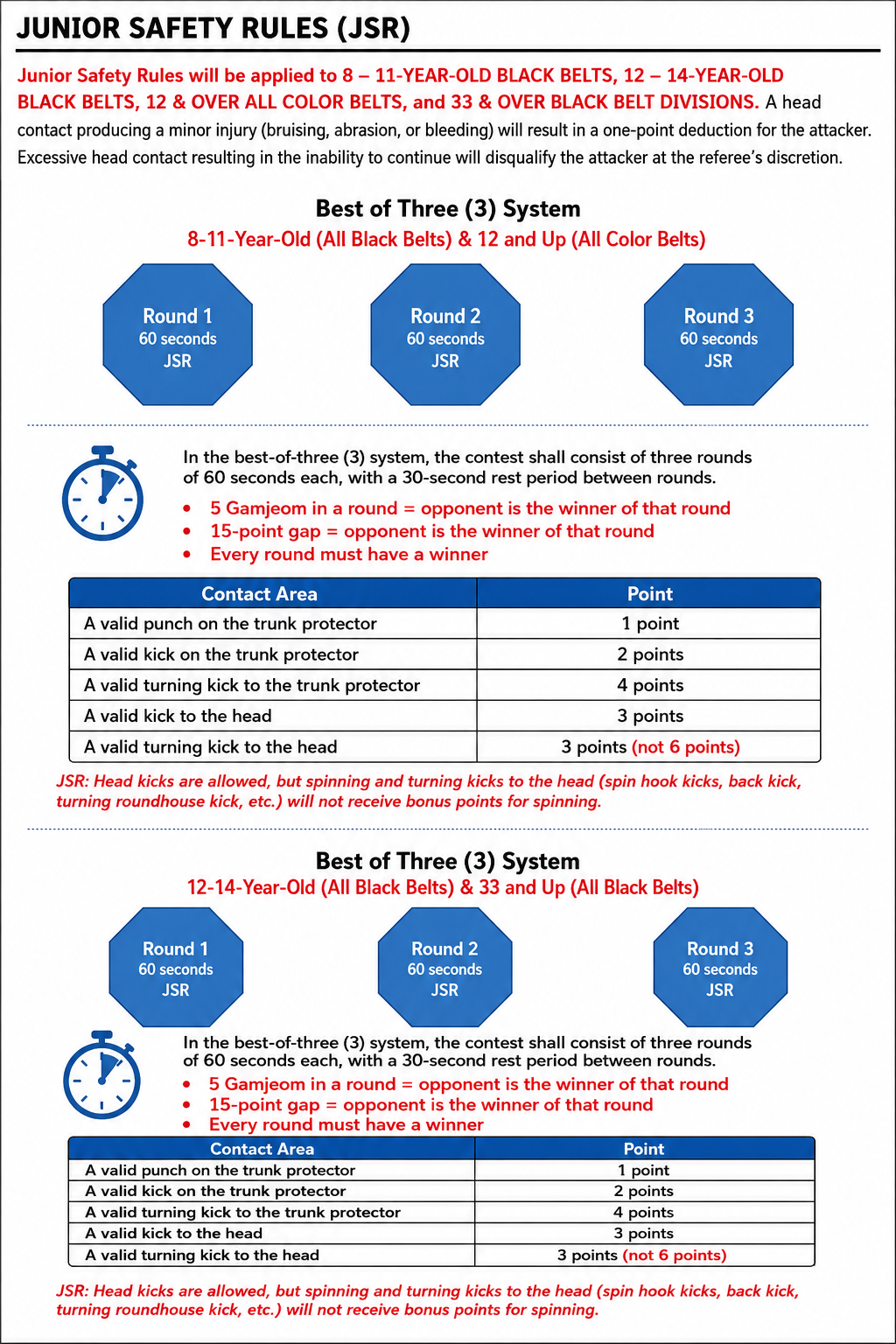
Important Notes: the sparring division for 12-14 year old black belts will be using the Daedo PSS System. Athletes in these age divisions are required to bring their own E-foot gear (GEN2).
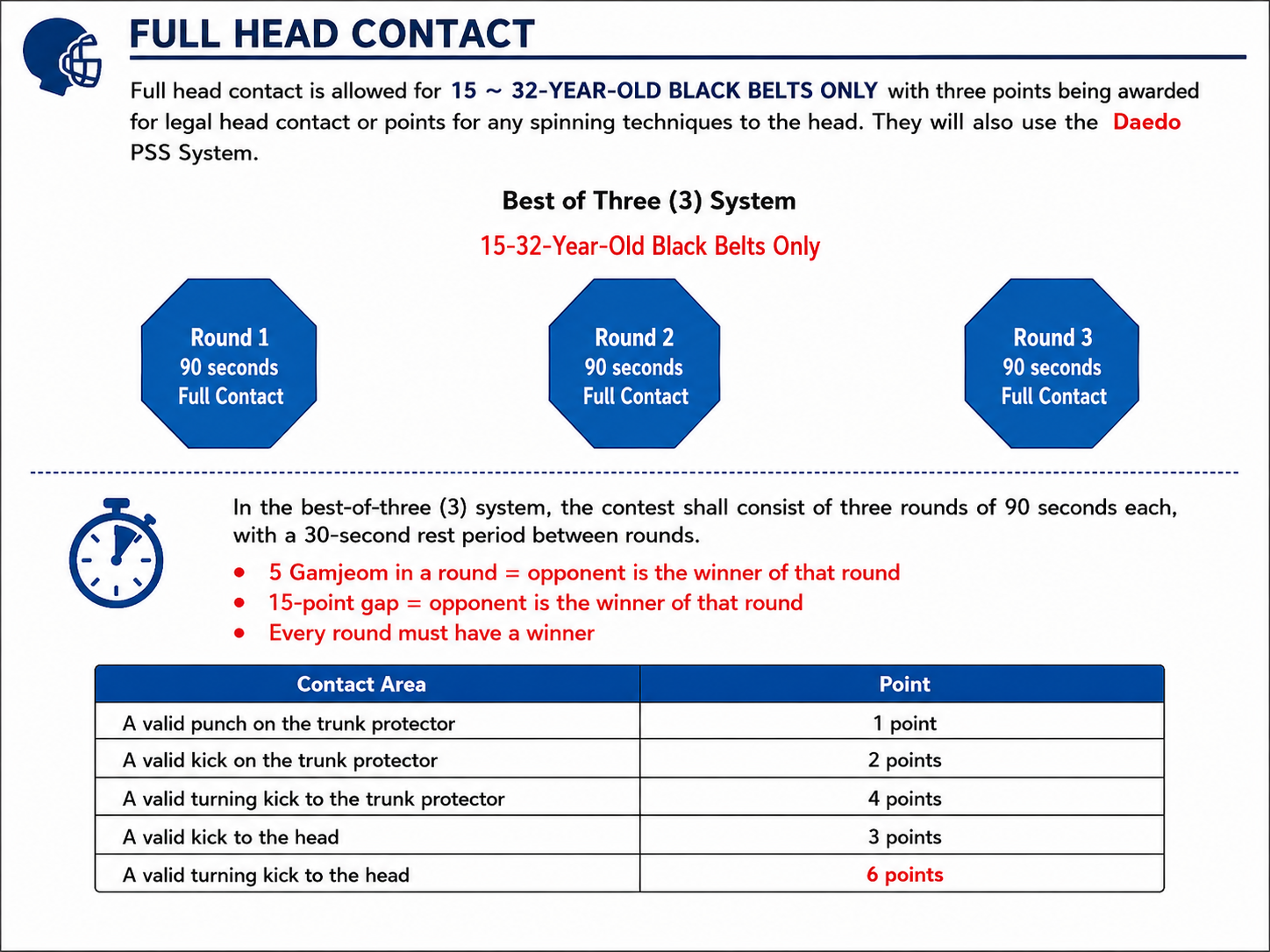
Important Notes: the sparring division for 15-17 and 18-32 year old black belts will be using the Daedo PSS System. Athletes in these age divisions are required to bring their own E-foot gear (GEN2).
Weigh-ins: World class sparring divisions only. From 11:30-12:00 pm at the tournament site staging area. (Brackets will be posted on staging wall by 12:30 pm)
Note: Weight Division: Please see Sparring division page attached
Awards: 1st, 2nd, and two 3rd place winners in each division will be awarded medals, presented in the ring immediately following that division’s final match.
- All World class division: all winners will get a medal after game over.
- All 11 years old and under will get medals.
Coach’s Dress code: Coaches are prohibited from wearing jeans, shorts, tank-tops, hat/cap, or slippers while on the arena floor or coaching a competitor. Please follow the official USAT dress code for more details.
NOTE: The tournament director may modify some rules according to the local conditions. They also reserve the right to combine or divide weight categories depending on the size of the group.